

The altiplano
A hard place, and the reason the fleece is soft
The high plain between Arequipa and the Colca valley sits above four thousand metres. The sun is fierce enough by noon to burn, and most nights of the year the temperature falls below freezing — a swing of thirty degrees inside a day. An animal that lives out in that grows a fleece dense at the base and fine at the tip, because it has to be both a blanket and a coat. That is the fleece a shawl wants, and it cannot be farmed for at sea level.
The ground gives back only what it is not stripped of. Alpacas are soft-footed, so they do not cut the turf the way hooved stock does; they crop rather than pull, so the bunch grass regrows; they drink little and take no supplementary feed. Graze them too low or too long and the fiber coarsens within a season — the pasture and the fleece are the same question.
4,000 m
Above the sea
The altitude at which the herds graze, and below which the fiber loses its fineness.
6,000
Years of herding
Alpacas were domesticated in these mountains long before the Inca.
80%
Of world alpaca fiber
Peru produces the great majority of it, and nearly all of the finest grades.
120,000
Andean families
Make their living from the herds, most of them on smallholdings.
Textile heritage
Cloth was currency here
Long before the Spanish arrived, Andean societies measured wealth in textiles rather than metal. The finest cloth was reserved for the Inca court, woven from vicuña and the best alpaca, and it was burned as an offering rather than traded away. The looms in use today are the same design.
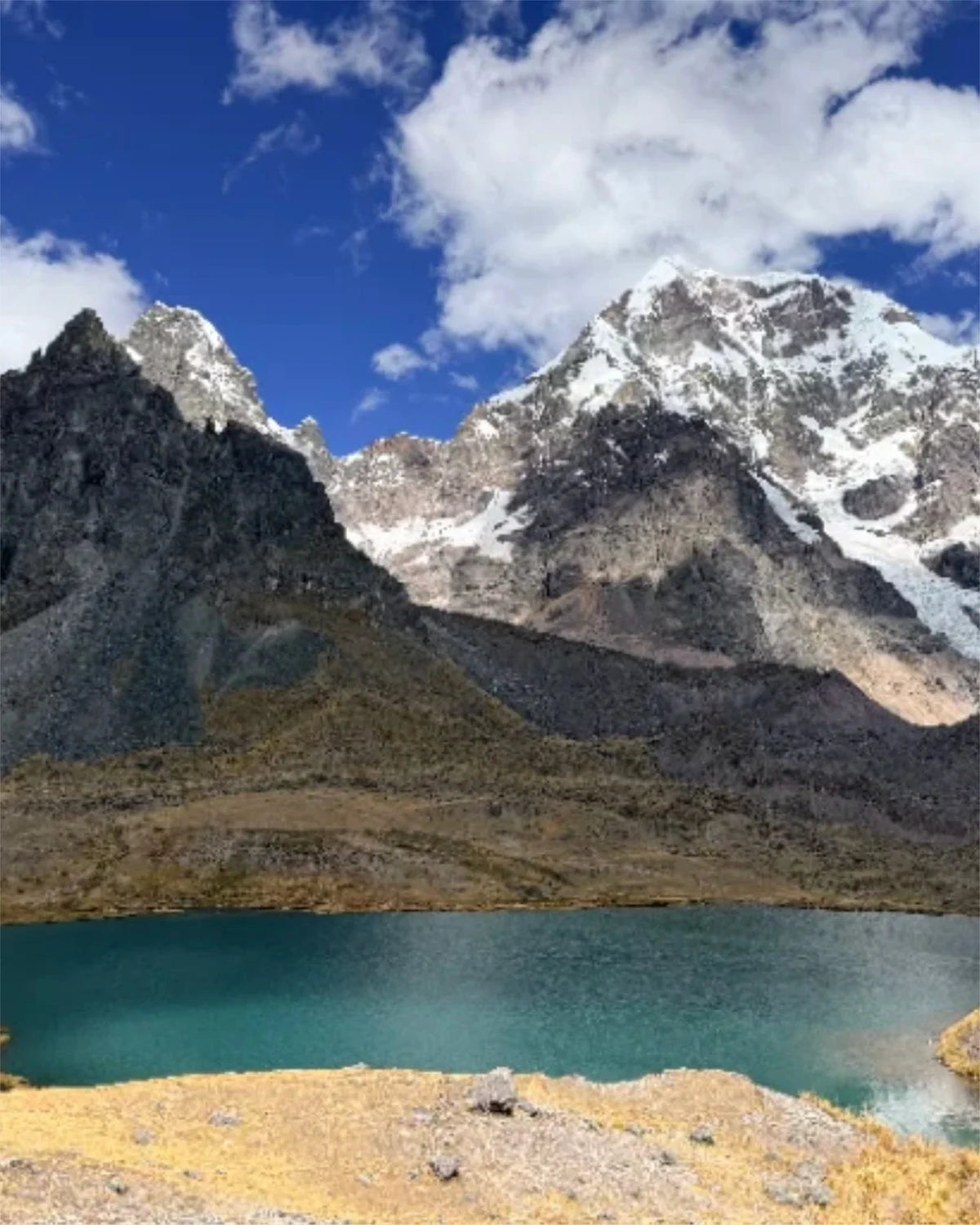
Ice standing above four thousand metres. The meltwater feeds the plain the herds graze.
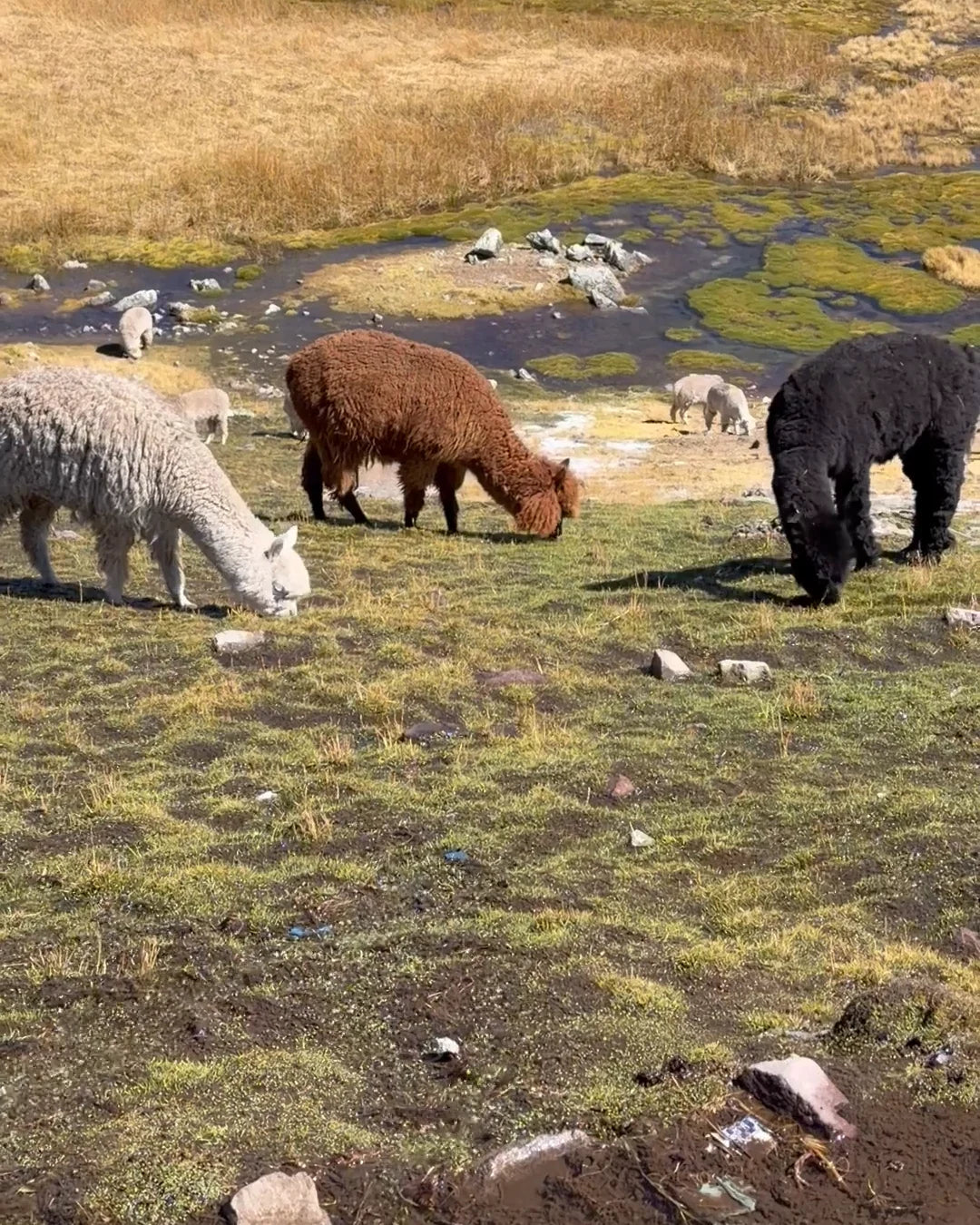
Ivory, fawn and black in a single herd — every shade here is grown, not dyed.
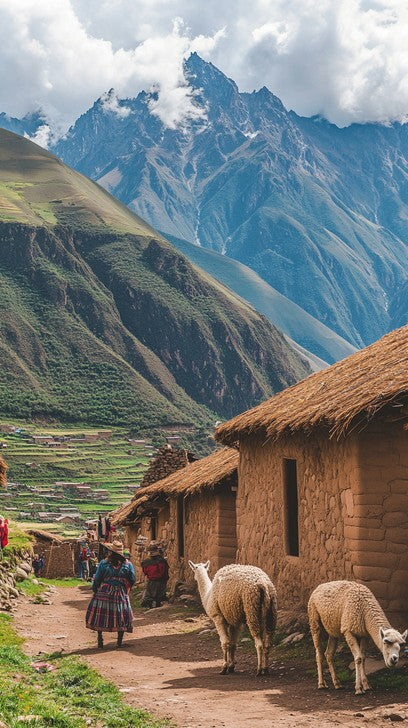
The village on the valley floor, where the fleece comes down from the high pasture.
How we buy
Paid for grade, not for volume
We buy through cooperatives that pay the herder on the fineness of the clip rather than its weight. It is the arrangement that rewards keeping the herd well and shearing once, in the warm season, instead of taking more and taking it sooner.
Nothing is blended to lower the cost, and nothing is dyed. What the animal grew is what reaches the loom.
A country that has understood this fiber for six thousand years.